PRODUCT DESIGN
FULL TIME WORK
Partner Rating: Bringing Partner Quality to Wego.com's Price-Driven Experience
Company
Wego.com
Timeline
May - Aug 2025
Role
Product Designer
Tools
Figma
First scoped in 2022 and shelved, Partner Rating was revived in 2025 in response to a significant year-on-year decline in Wego's Flights Metasearch conversion rate, requiring the team to move fast under a tight timeline.
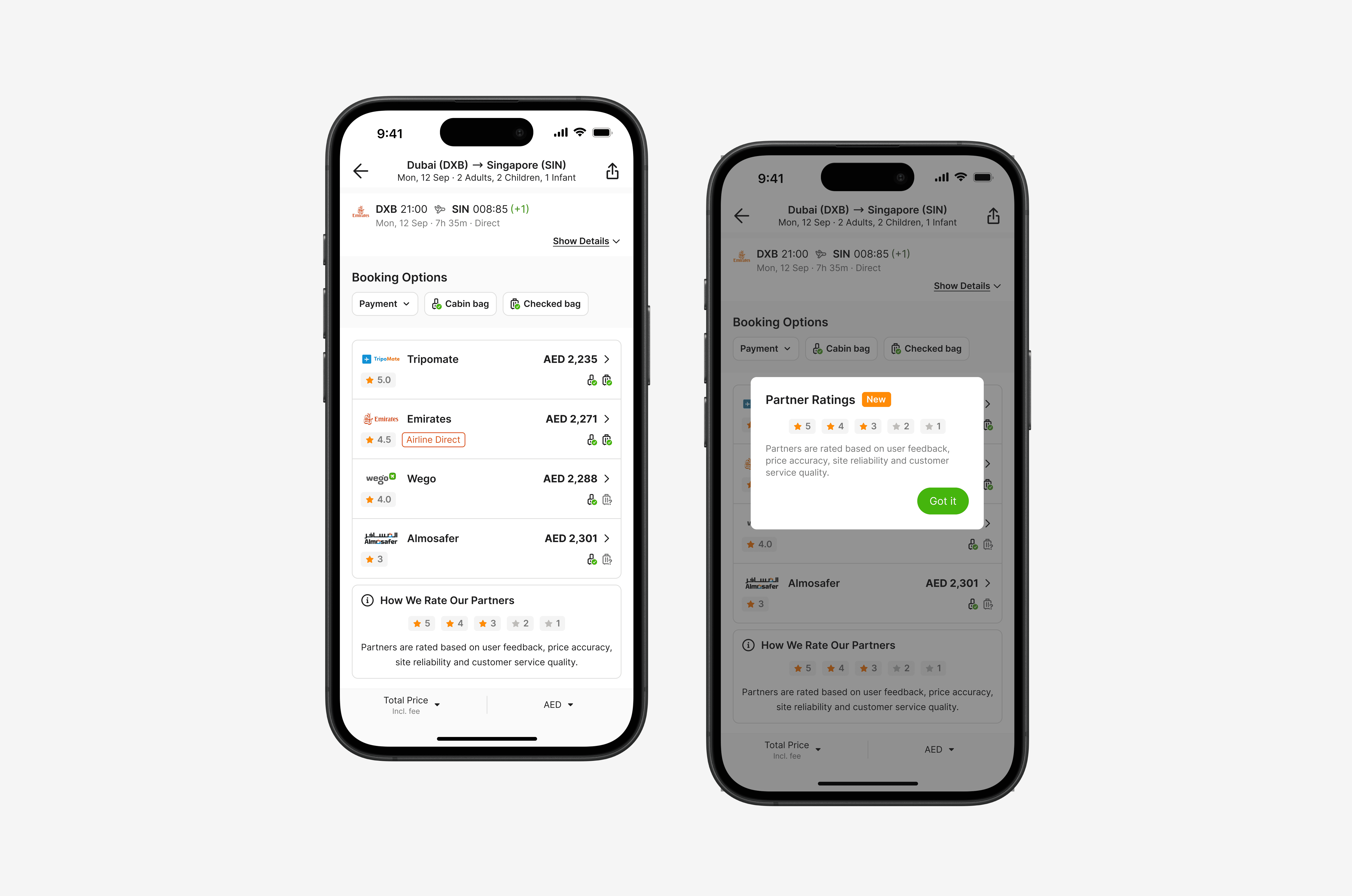
Partner Rating displays quality scores for booking partners such as OTAs, airlines, and sponsored providers on the flight details page, helping users make more confident booking decisions while giving Wego a way to surface better-performing partners.
As the main designer on this feature, I handled the end-to-end design process, coordinating with the PM, SPM, and engineers across mobile and desktop. I also initiated and maintained a Progress Report to keep iterations documented and handoffs clear.
pROBLEM
Users Could See the Price, Not the Partner
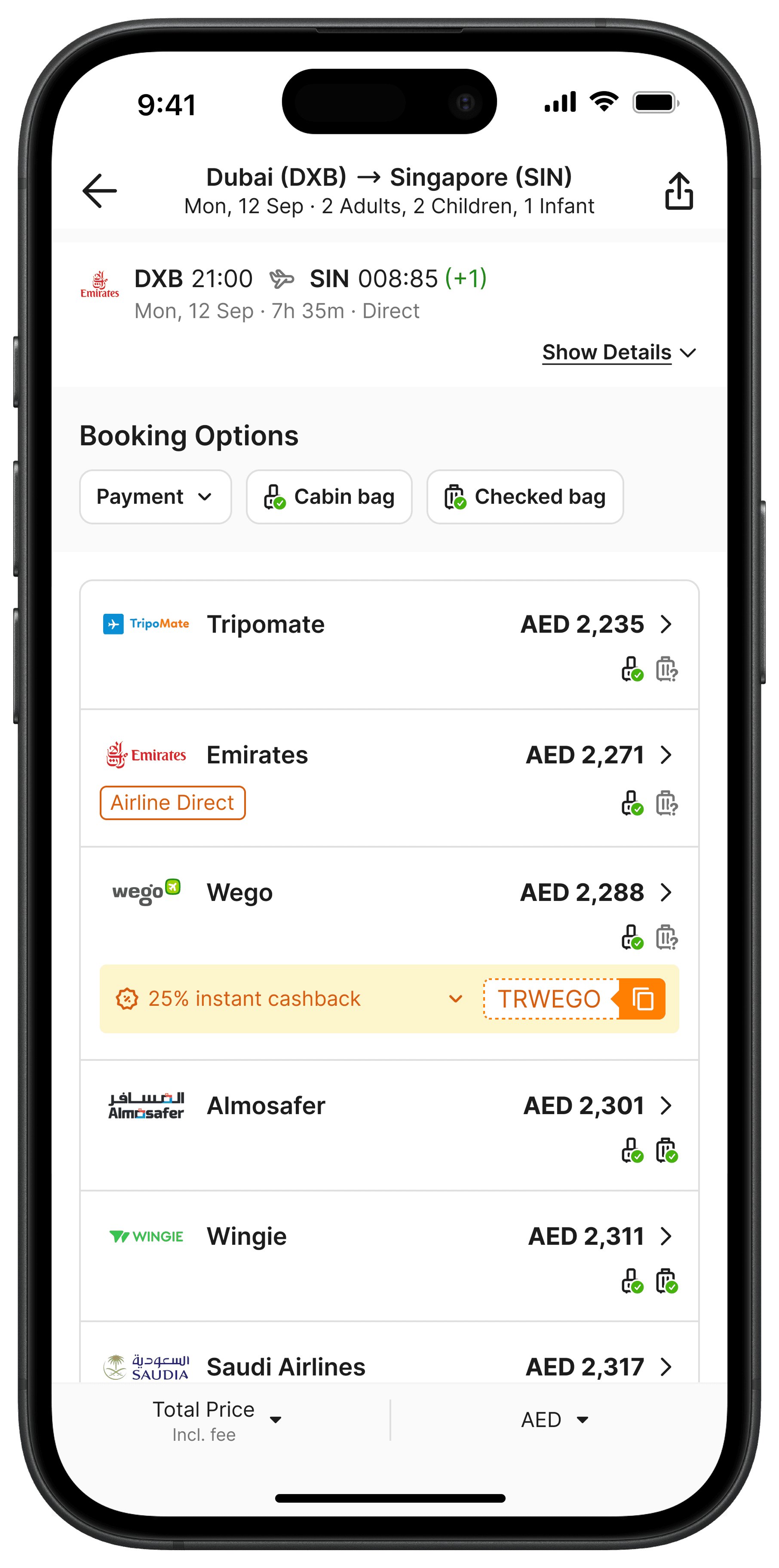
Wego works with 100+ booking partners, varying a lot in price accuracy, reliability, and service. But on the flight details page, users saw only two things: the partner's name and its price.
There is a transparency gap. Cheaper doesn't mean better. With no quality signal, users clicked blind and often landed on partners with inaccurate prices or weak support.
Left to compare on price alone, users defaulted to the cheapest option, ran into inaccurate prices and weak support, and lost trust. It surfaced as rising complaints and a 15% year-on-year drop in conversion.

This wasn't a new problem. Wego had tried to guide users before, with a "Recommended" row of featured partners above the results, including its own OTA. But the basis was never visible: the featured picks weren't the cheapest, and the labels varied.
With no stated, consistent reason, the row read as promotion, not guidance. It was removed, and the gap stayed open.

DESIGN DECISION #1
Rating Design
The core principle was to keep the rating minimal. The booking options list already contains many components.
The last thing we wanted was to distract users or slow them down from completing the main action: choosing a partner.
We decided to move forward with option 2. Simple Star Icon for the A/B Testing.
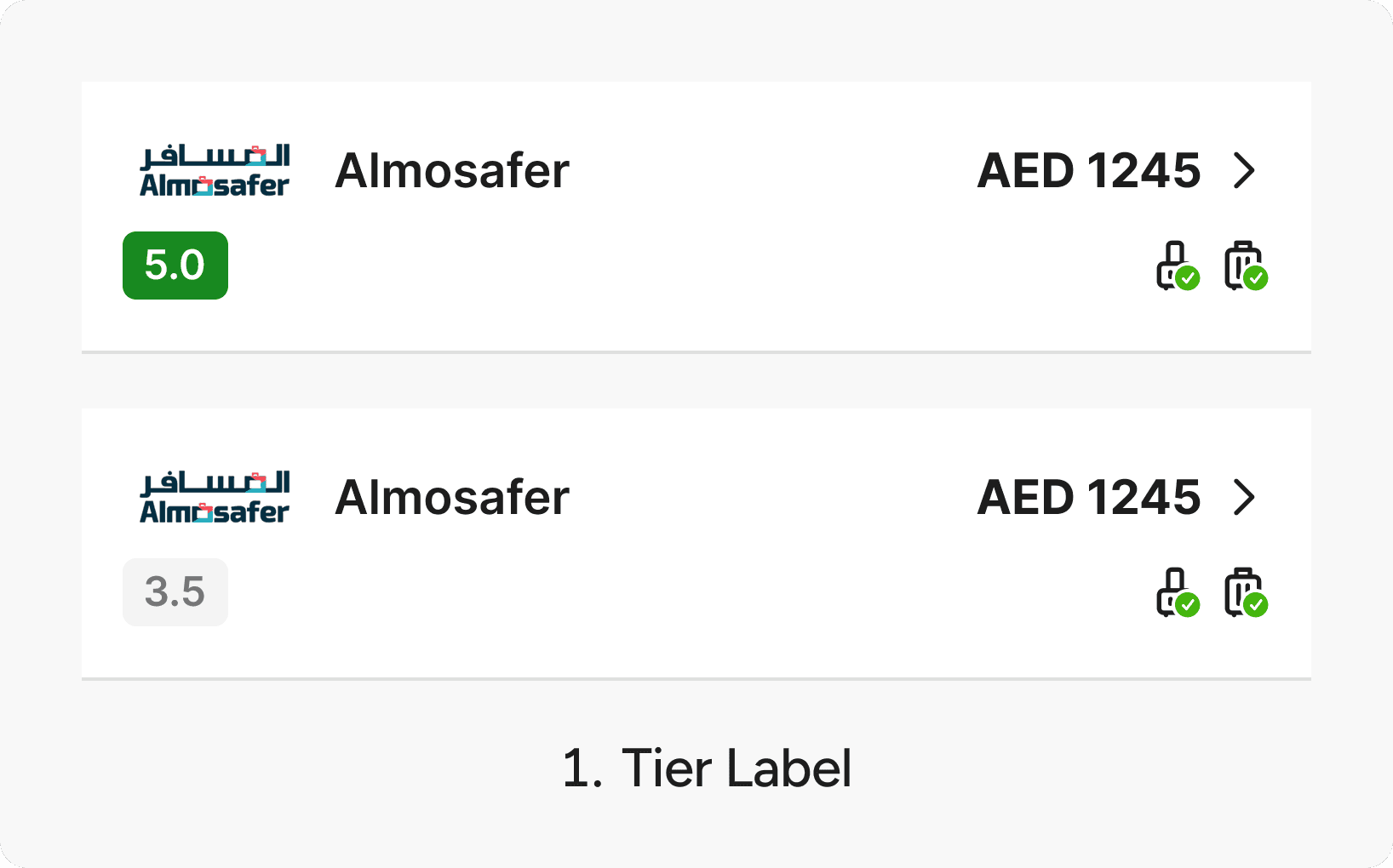
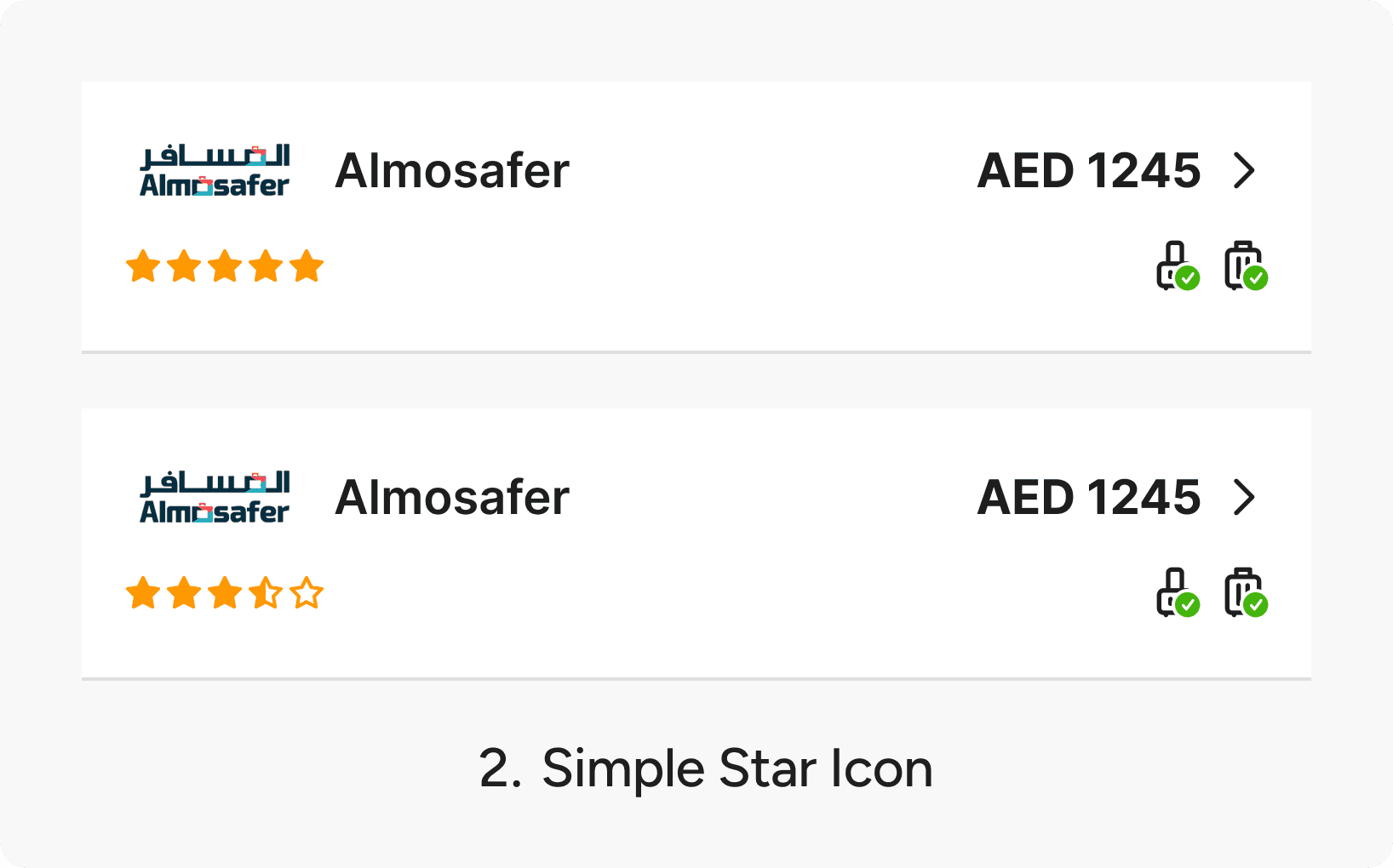
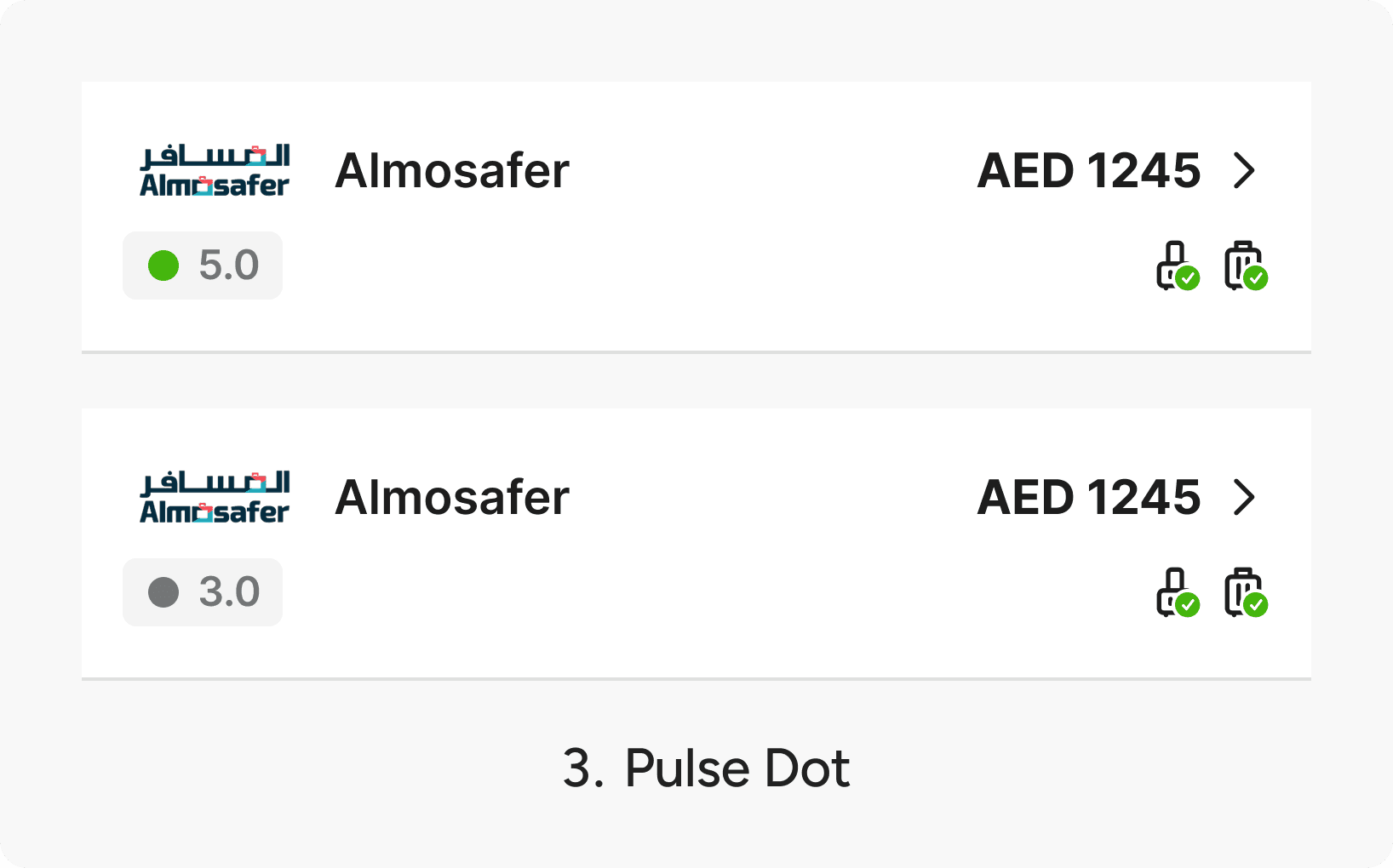
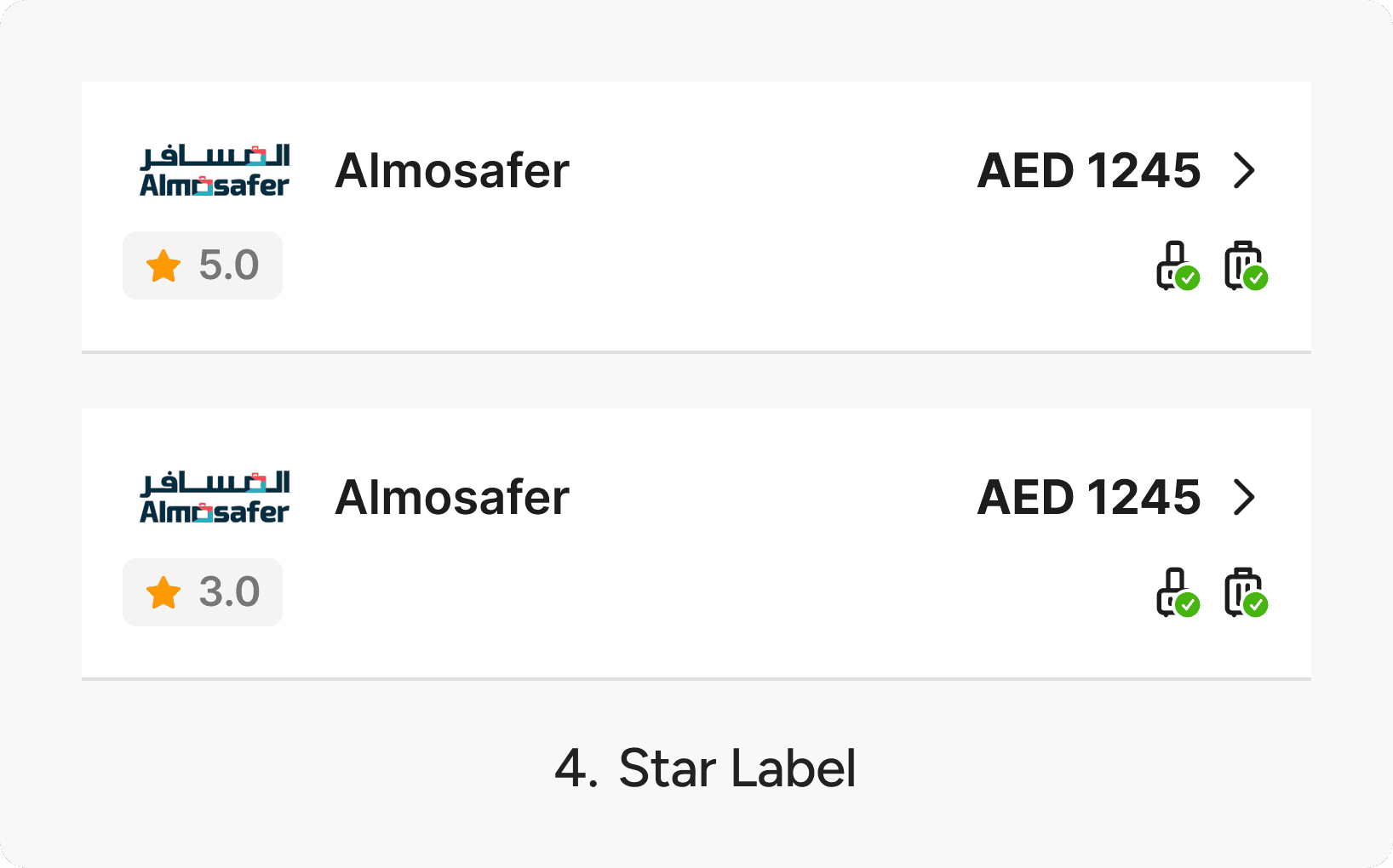
DESIGN DECISION #2
How to Inform Users About Partner Ratings?
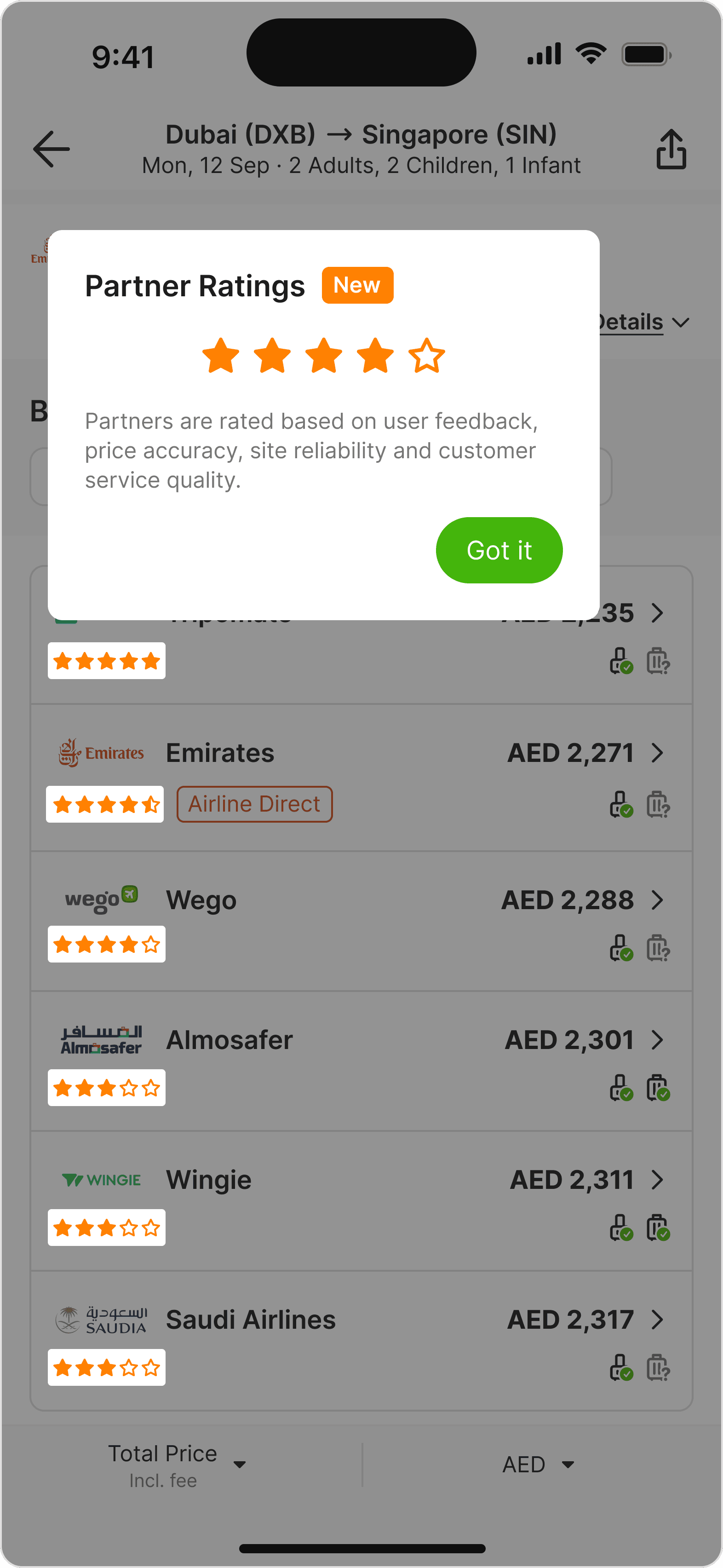
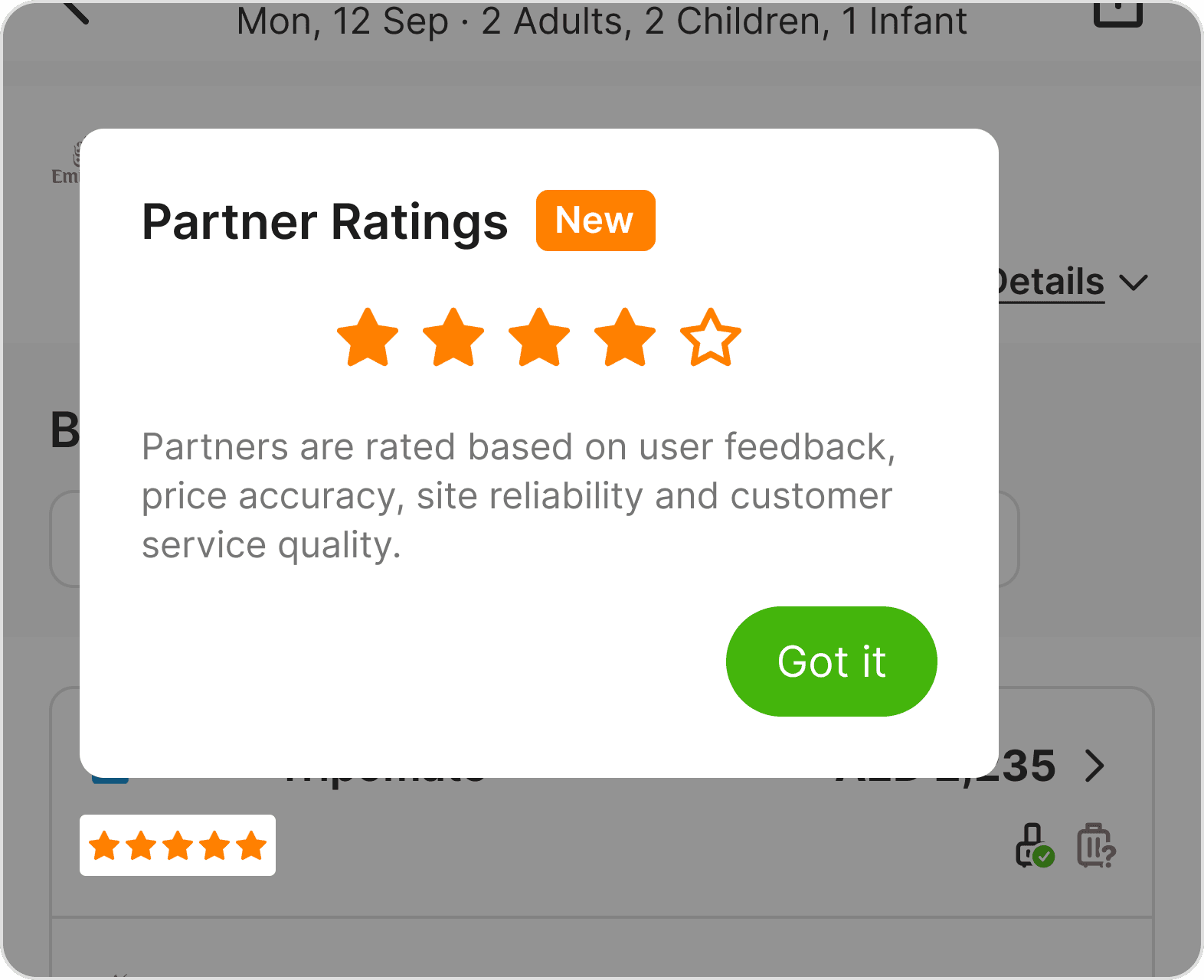
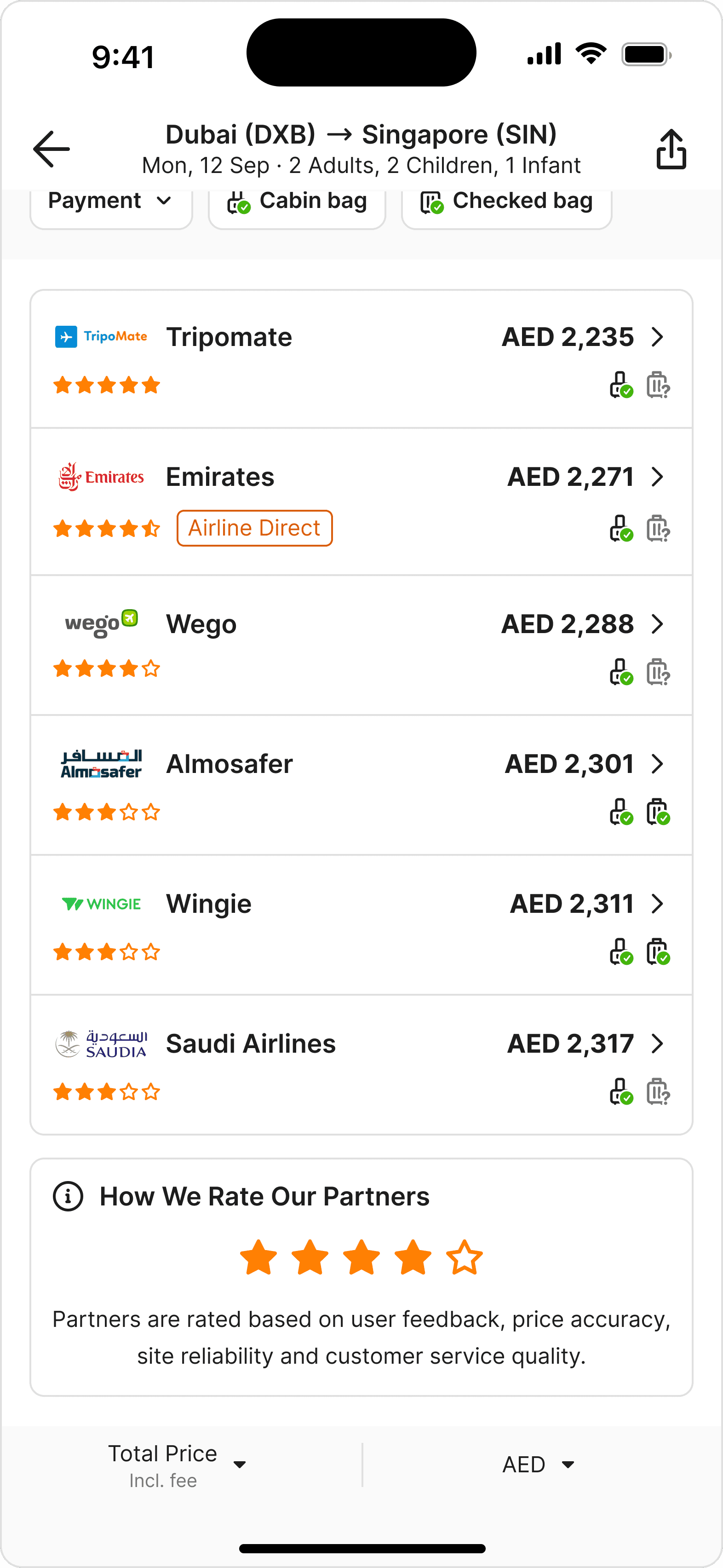
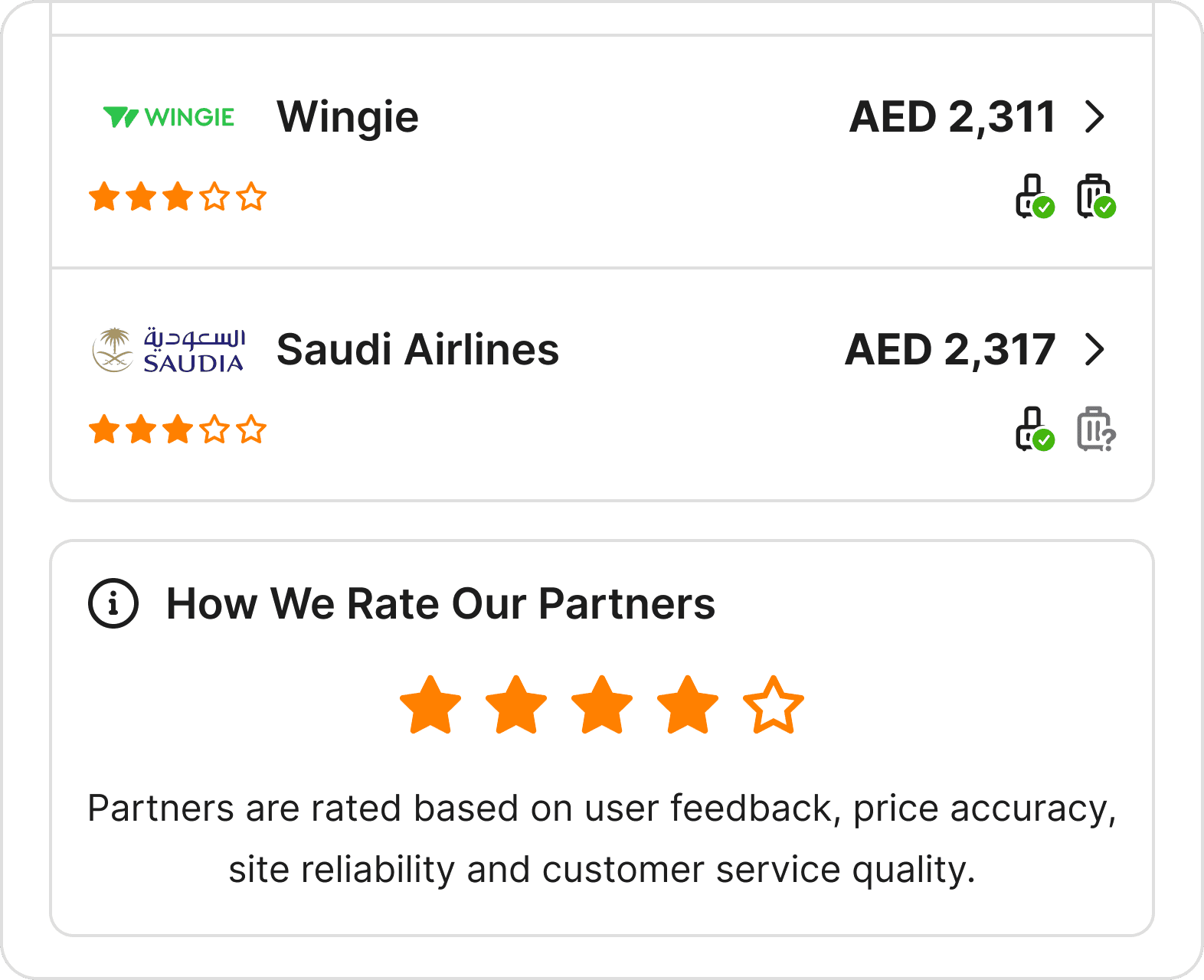
Ratings are most commonly associated with user-submitted reviews. This feature works differently, so we needed to communicate that distinction clearly and avoid confusion from the start.


Tap cards to reveal pros & cons
After weighing the pros and cons of each option, we moved forward with the Info Banner for its persistent and low-effort nature, combined with a one-time popup to ensure first-time visibility.
A/B TEST
A Win for Users, A Challenge for Revenue
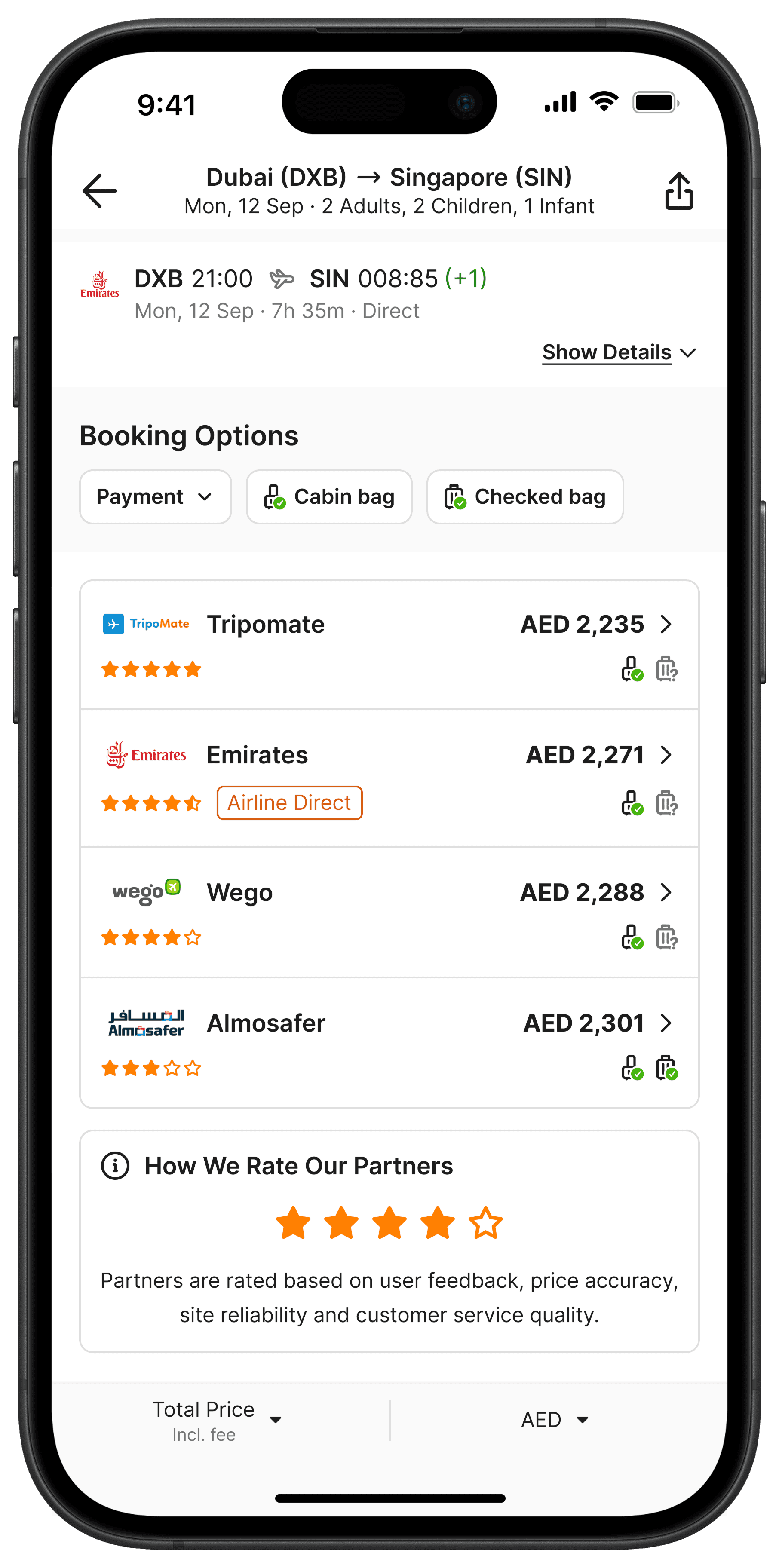
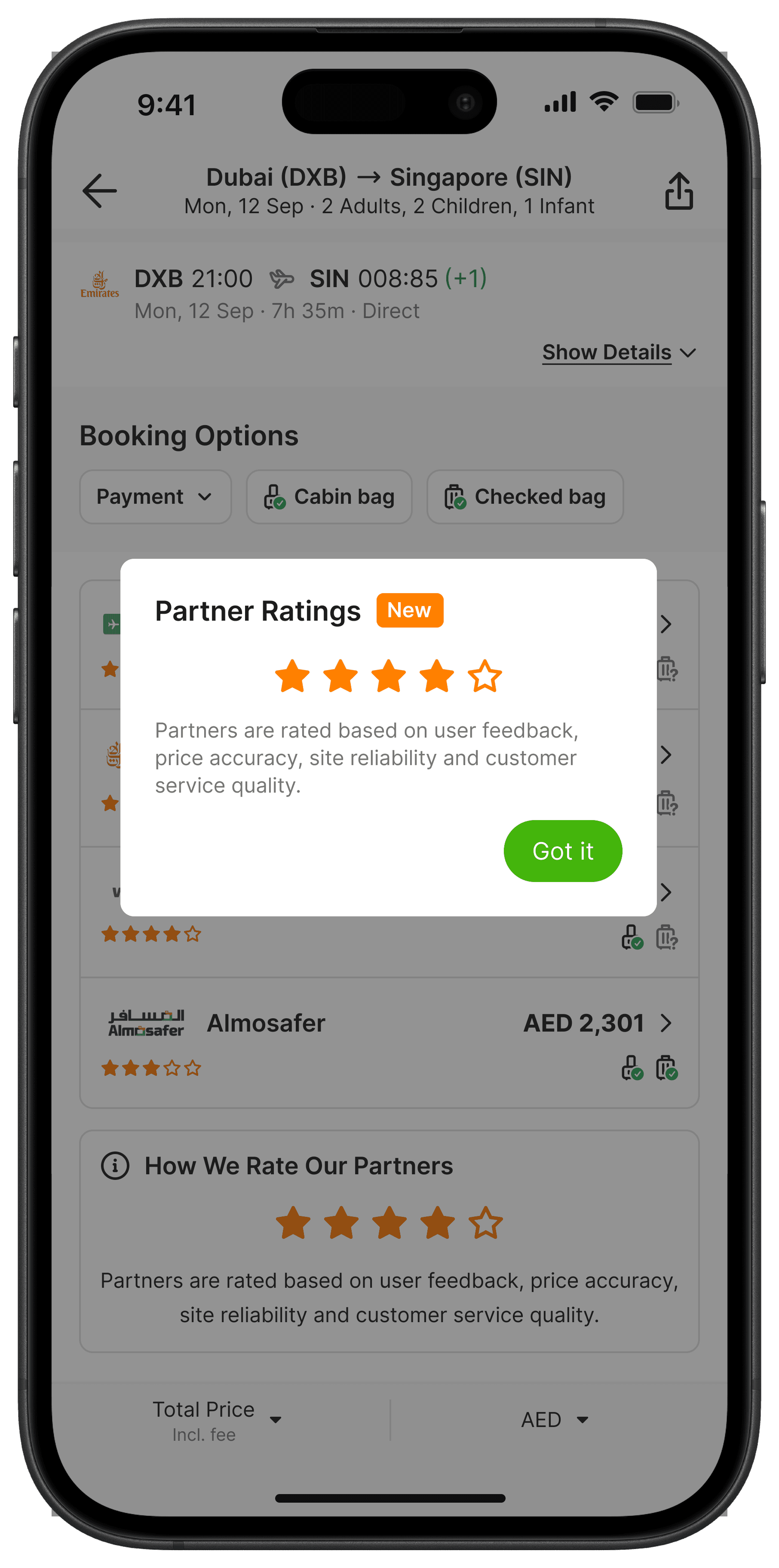
What Improved
Conversion Rate (CVR) increased, suggesting users were being guided toward better partners
Partners rated 3.5 and above saw the strongest CVR gains
Revenue earned per click (eCPC) rose, meaning users were clicking higher-paying partners
What Declined
Clicks per session dropped, users became more selective
The higher eCPC was not enough to offset the drop in overall clicks
Net result: revenue per user fell
What We Learned
The feature improved CVR but hurt revenue. Users became more selective, which was the goal, but click volume dropped enough to outweigh the gains.
The likely cause: too much at once → star ratings, an onboarding popup, and a footer explanation on a single screen overwhelmed users before they could act.
Most fixes point to backend improvements, particularly increasing rating variance across partners. Currently 75% of partners score 4 or 5, leaving little meaningful differentiation for users to act on.
dESIGN IMPROVEMENT
How Do We Say More With Less?
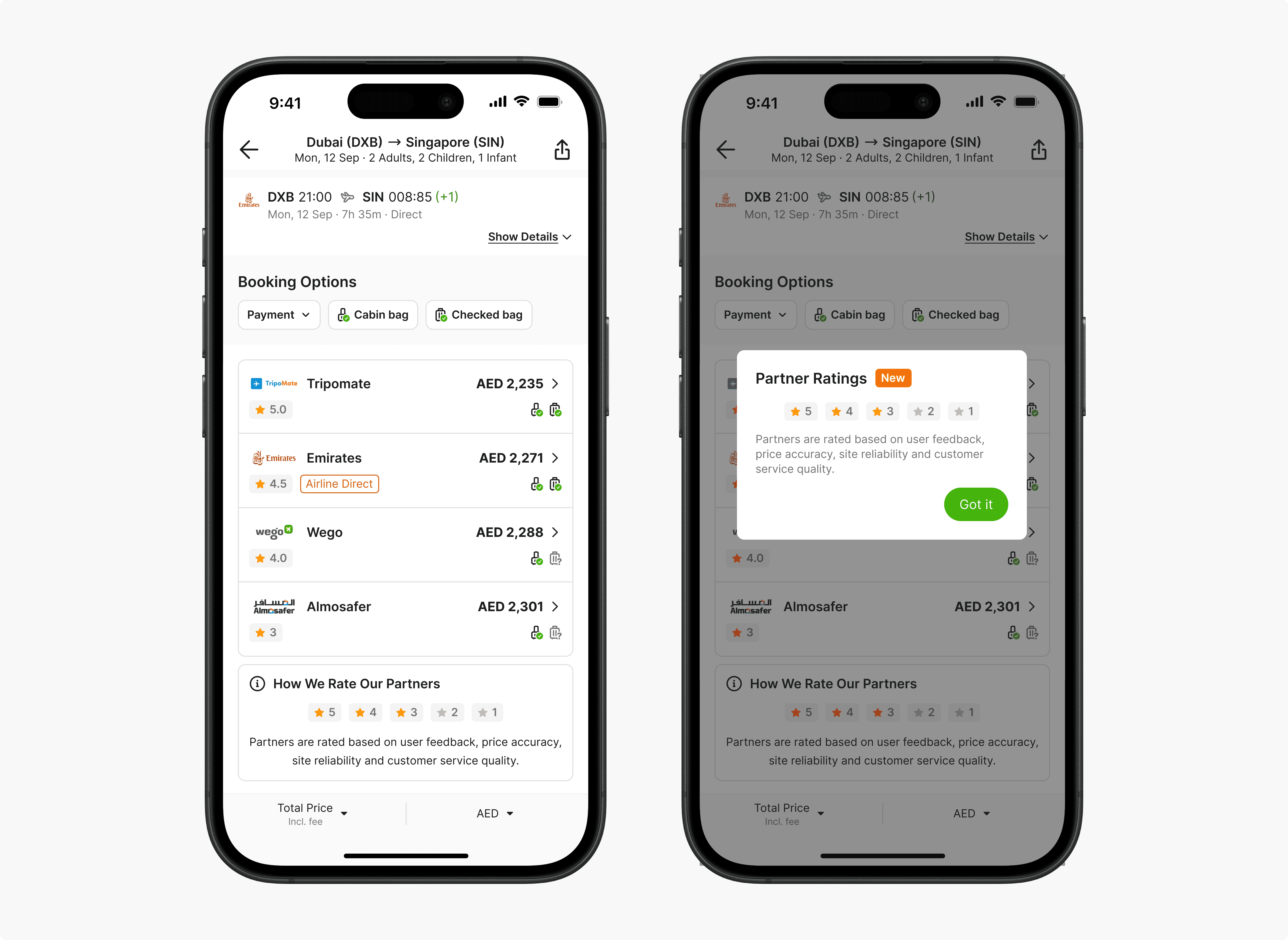
We switched from the Simple Star Icon to the Star Label variant and added a subtle color progression to differentiate high ratings from low ones. The Star Label reduces the need to count individual stars, and the Info Banner can now display the full 1-5 rating scale at a glance without overexplaining it.
This experiment is currently on hold while we figure out a better rating system and calculation to make the scores more meaningful for users.
Lesson Learned
Better decisions, not always better revenue
Better decisions can also mean fewer, more selective clicks, which hurt short-term revenue. Features that improve decision quality need other revenue levers to compensate while trust builds over time.
On a dense page, design by subtraction
The booking options list had no room for more. Future features in this section should start by asking what to remove, not what to add.
Education and conversion pull in opposite directions
An auto-triggered popup teaching users about ratings may have interrupted booking intent at the wrong moment. Opt-in education is worth testing next.
What I Would Do Differently
I would have pushed to define a clearer north star metric before the experiment launched. With CVR and revenue pulling in opposite directions, we lacked a shared definition of success until after the results came in. It would also have been worth thinking upfront about a fallback revenue strategy, such as cross-sell or upsell opportunities, in case the feature hurt short-term volume.
Other Projects

Thank you for reading this far, kudos to you! Let’s together take a deep breath 🍃—and maybe a sip of water 🧊. But hold on, did you say you want more? Lucky you, there's another one below. See you on the next page!